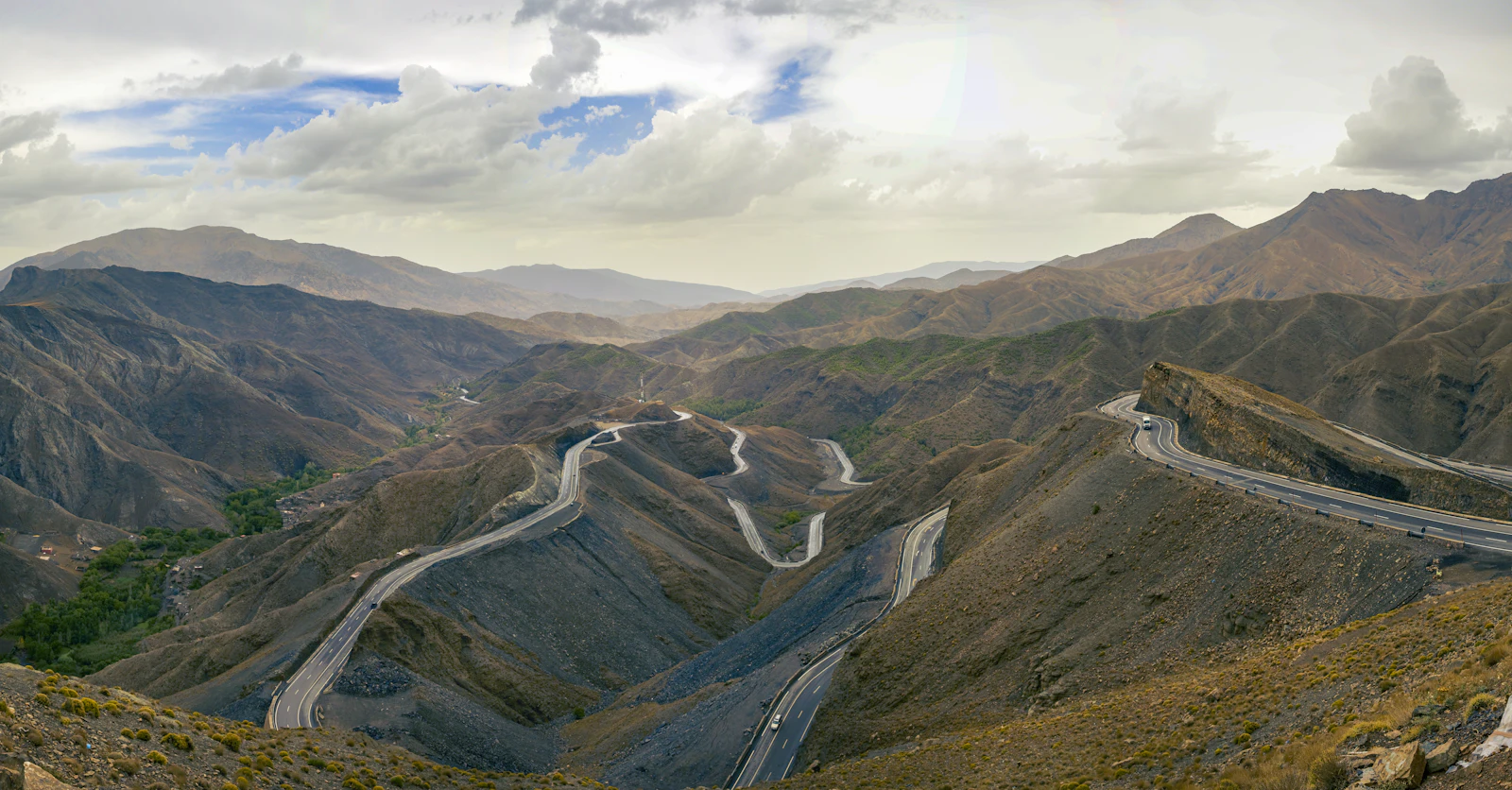
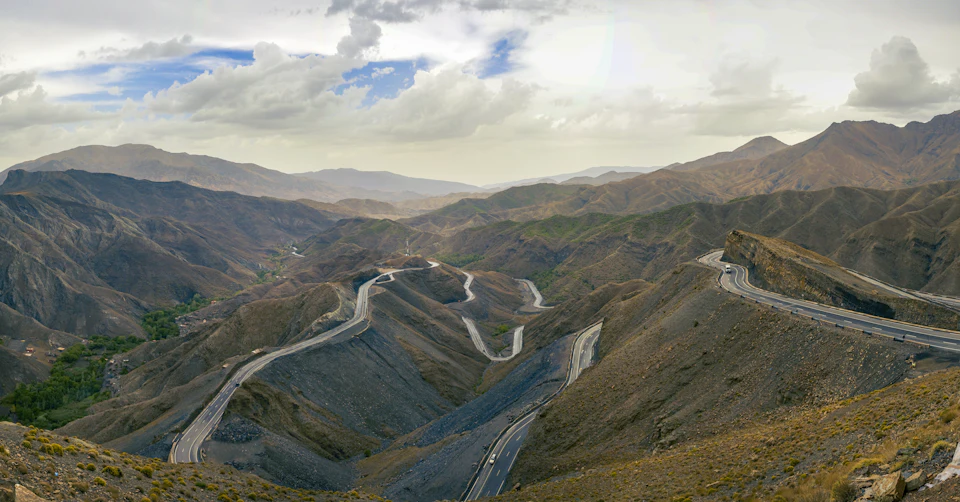
Picture the Tizi n'Tichka pass with a hairpin every few hundred metres, a lorry overtaking on a blind bend and your phone's navigation app recalculating. Now picture the same road from the passenger seat, camera in hand. Whether to rent a car in Morocco or hire a driver is one of the biggest planning decisions for a Moroccan trip, and the right answer depends on your route, your budget and how much you enjoy driving in unfamiliar conditions.
Rent a car in Morocco or hire a driver: the short answer
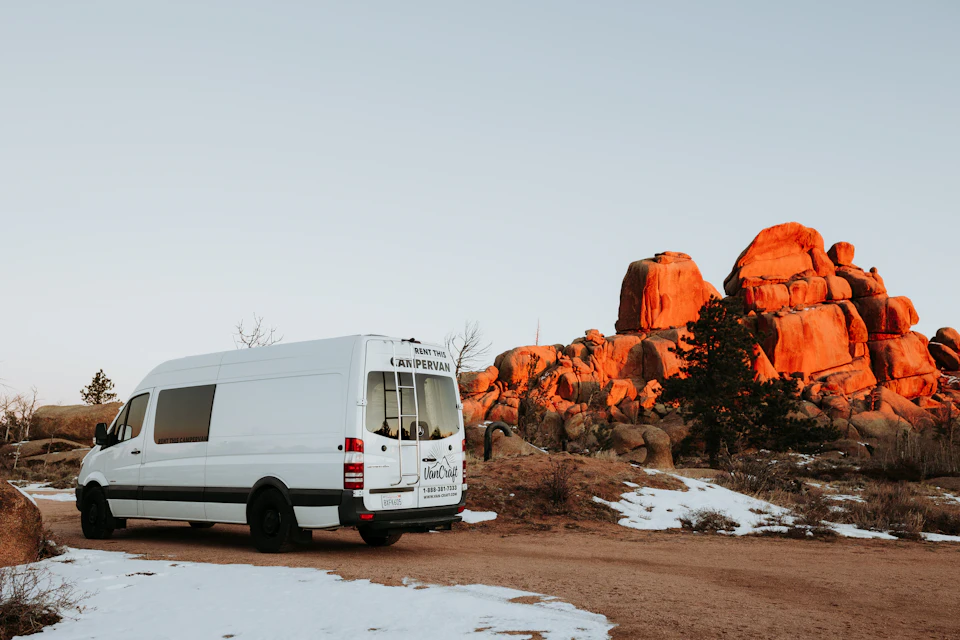
Renting a car is usually cheaper per day and gives total freedom, and it works well for confident drivers on simple routes such as the Atlantic coast or the motorway network. Hiring a private driver costs more but removes navigation, parking, police checks and mountain driving from your list of worries, and it is often the better choice for medinas, mountain passes, desert routes and short stays where every hour counts.
Many travellers mix both: a driver for arrival and for the demanding stretches, a rental car for an easy coastal section, or private transfers between cities with no car at all inside the medinas.
What does each option really cost?
A daily rental rate looks cheap online, but it is only one part of the cost. The table compares typical cost items (all figures approximate and seasonal).
| Cost item | Rental car (self-drive) | Private driver / transfer |
|---|---|---|
| Vehicle | Small car from roughly 250-400 DH per day in low season, more in peak periods and for automatics or SUVs | Fixed price per journey or per day, including vehicle |
| Fuel | Paid by you; long routes add up quickly | Included |
| Motorway tolls | Paid by you on ADM autoroutes | Included |
| Insurance excess / deposit | Credit card deposit, often several thousand DH blocked | None |
| Parking | Guarded parking near medinas and riads, small daily fees | Driver handles it |
| Driver's time | You drive | Included in price |
For a solo traveller on a two-week loop, self-drive is generally the cheapest. For a family of four or a group of friends, a vehicle with driver split between people can be close in cost to two rental cars, without the stress.
When renting a car in Morocco makes sense
- You are an experienced driver and comfortable with assertive traffic, roundabouts and occasional livestock on the road.
- Your route uses mainly motorways and coastal roads, for example Casablanca to El Jadida and Oualidia, or Agadir to Essaouira.
- You want to stop anywhere, change plans daily and explore small villages at your own pace.
- You are staying in hotels or villas with parking rather than riads deep in a medina.
When a private driver is the better choice
- You arrive late at night, in an unfamiliar airport, after a long flight.
- Your route includes the High Atlas (Tizi n'Tichka), the Middle Atlas in winter, or long desert drives towards Merzouga or Zagora.
- You stay in medina riads in Marrakech or Fes, where parking is far from the door and lanes are car-free.
- You have limited days and want to use driving time to rest, read or enjoy the views.
- You would rather not deal with police checkpoints, speed cameras and fines in another language.
A private driver also knows where to stop for clean toilets, good tagines, argan cooperatives or the best viewpoints, which turns a transfer into part of the trip.
What you need to rent a car in Morocco
- A valid driving licence; an International Driving Permit is recommended and some agencies ask for it.
- A minimum age, often 21 to 23 depending on the agency, with at least one or two years of licence.
- A credit card in the main driver's name for the deposit.
- Check the car with the agent, photograph all existing damage and confirm the fuel policy.
- Ask about breakdown assistance, the insurance excess and what is covered on unpaved tracks.
Driving is on the right. Morocco's road safety authority, NARSA, publishes rules and safety campaigns; if you read French, its official website is a useful reference. Our German-language guide to driving rules and police checks in Morocco goes into the details.
The hybrid approach: driver for the hard parts
A common and sensible plan is to book private transfers for the stretches that are tiring or stressful and keep public transport or a rental for the rest. For example:
- Airport pickup in Marrakech with a driver, then no car while you explore the medina on foot.
- A private car over the High Atlas with our Marrakech to Ouarzazate transfer, stopping at Ait Ben Haddou.
- Day trips to Imlil, Ourika or the Ouzoud falls with our Atlas and day trip drivers.
- Train between Marrakech, Casablanca, Rabat and Fes, which is comfortable and fast on that axis.
- City-to-city connections with our intercity private transfers from Marrakech when the train does not go where you need.
Example: a 7-day Marrakech loop, two ways
Take a typical first trip: arrive in Marrakech, spend two nights in a medina riad, cross the Atlas to Ouarzazate and Ait Ben Haddou, continue to the coast at Essaouira and return to Marrakech for the flight home. With a rental car, you would collect the car at the airport, pay for guarded parking during the Marrakech nights while not using it, drive the Tichka yourself and handle the return to the airport. With private transfers, you would have an airport pickup, no car in Marrakech, one transfer over the mountains, one to the coast and one back to the airport. The second plan costs more, but you spend the Marrakech days on foot without a parked car, and every long drive becomes rest time. For many couples and families, that trade-off is worth it.
The calculation changes for a long, slow road trip of two or three weeks into remote areas, where a rental car offers flexibility that transfers cannot match, as long as you are comfortable behind the wheel.
Is driving in Morocco dangerous?
Main roads are generally in good condition and the motorway network is modern. The challenges are different driving habits, overtaking on two-lane roads, pedestrians, carts and animals, poor lighting at night outside towns and frequent police speed checks. Mountain roads add hairpins, rockfalls and occasional snow closures in winter. None of this makes driving impossible, but it does make it more demanding than at home, and fatigue is a real factor on long days.
Key takeaways
- Self-drive is cheapest for confident drivers on simple routes; add fuel, tolls, parking and deposits to the daily rate.
- A private driver is better for late arrivals, mountain and desert routes, medina stays and short trips.
- Groups often pay a similar amount per person for a driver as for self-drive.
- A hybrid plan, using drivers for the hard parts, works for most visitors.
Not sure which route suits a driver? Our guide to the drive from Marrakech to Zagora shows what a long Atlas crossing looks like, or request a quote for your route.