Marrakech to Fes by car: distance, driving time and the best route
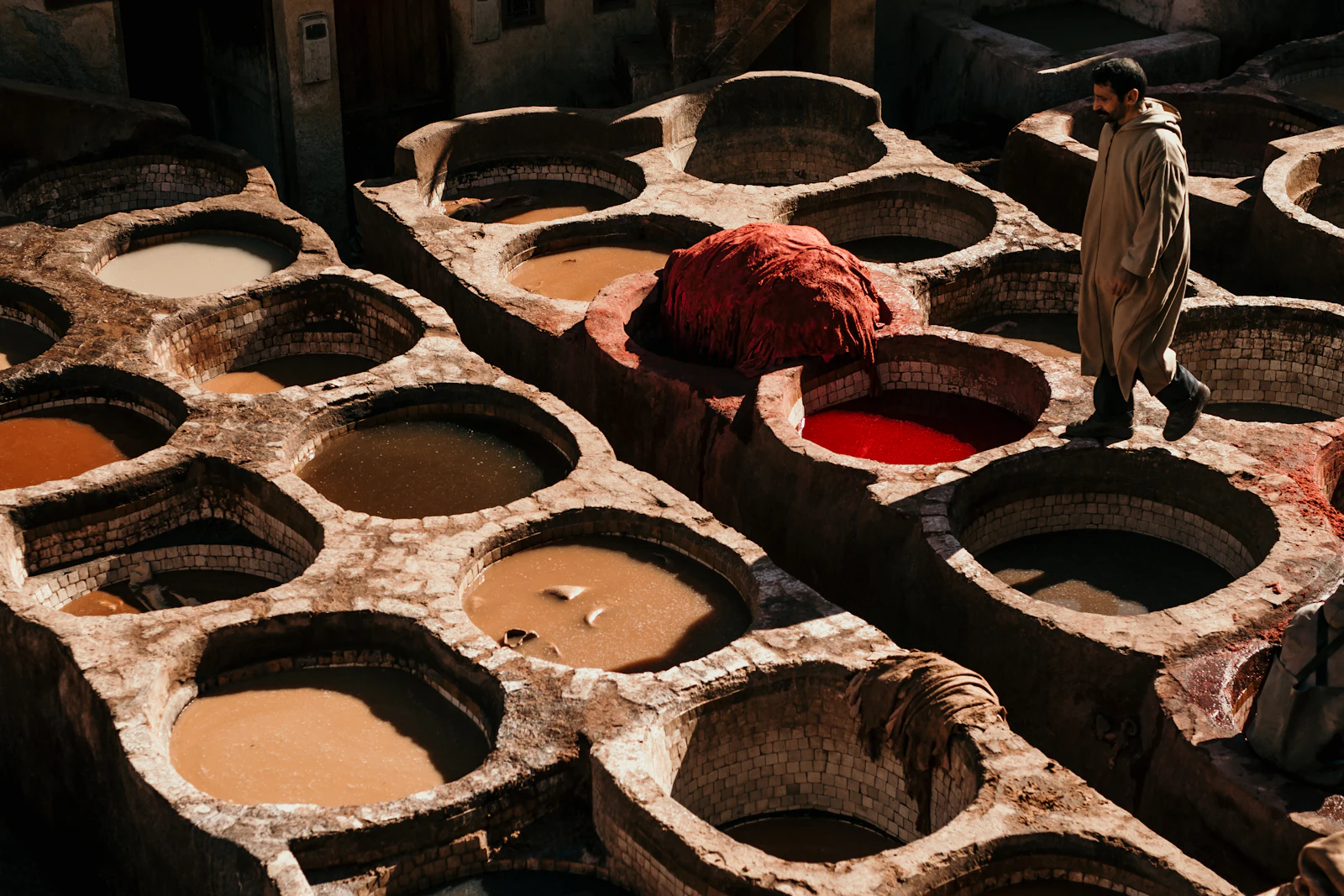
Marrakech to Fes by car is 530 km and takes about 5 h 30 on the motorway via Casablanca, Rabat and Meknes. The alternative road through Beni Mellal and the Middle Atlas is shorter on the map but slower: plan 7 to 8 hours. The direct train takes roughly 6 h 30 to 7 hours, and a private transfer costs €260 per sedan, door to door.
How far is Fes from Marrakech?
The two imperial cities sit at opposite ends of the country's main axis: Marrakech in the south, Fes in the north-east. By motorway the distance is 530 km. No road runs straight between them, because the Middle Atlas is in the way. You either go around the mountains by the Atlantic side or through them.
- Motorway distance: 530 km
- Driving time: 5 h 30, plus one or two breaks
- Train: direct, roughly 6 h 30 to 7 h at the time of writing
- Private transfer: €260 sedan, €300 minivan, €400 minibus, per vehicle, one way
- Arrival: the Fes medina is closed to cars. Drop-off is at a gate
Marrakech to Fes by car: which route is best?
| Route | Via | Time | Best for |
|---|---|---|---|
| Motorway | Casablanca bypass, Rabat, Meknes | 5 h 30 | Getting there the same day, rested |
| Middle Atlas road (N8) | Beni Mellal, Khenifra, Azrou, Ifrane | 7-8 h | Scenery, if you have a full day |
| Desert loop | Ouarzazate, Merzouga, Ziz valley | 2-3 days | Travellers who want the Sahara on the way |
The motorway: fastest and least tiring
You leave Marrakech heading north, pass Benguerir and Settat, skirt Casablanca on its bypass, follow the coast to Rabat, then turn inland past Khemisset and Meknes to Fes. It is toll motorway from start to finish, with service areas every half hour or so. The usual breaks are near Settat after about 1 h 45 and near Khemisset after about 4 hours.
The scenery is plain for the first half, then improves: cork oak forest after Rabat, rolling wheat and olive country around Meknes. This is the route we use by default, and the one the fixed price is based on.
The Middle Atlas road: slower, greener
The N8 runs along the foot of the mountains to Beni Mellal, then climbs through Khenifra to the cedar forests around Azrou, where Barbary macaques sit by the roadside, and on to Ifrane at 1,665 m, a town of pitched roofs built in the 1930s. It is a single carriageway with lorries and villages, so average speeds are low.
In winter, snow can close the section between Azrou and Ifrane for a few hours or a day. From December to February, check conditions the day before. If you want this road with a driver, say so when you book so the timing and route can be confirmed in advance.
The desert loop: a trip, not a transfer
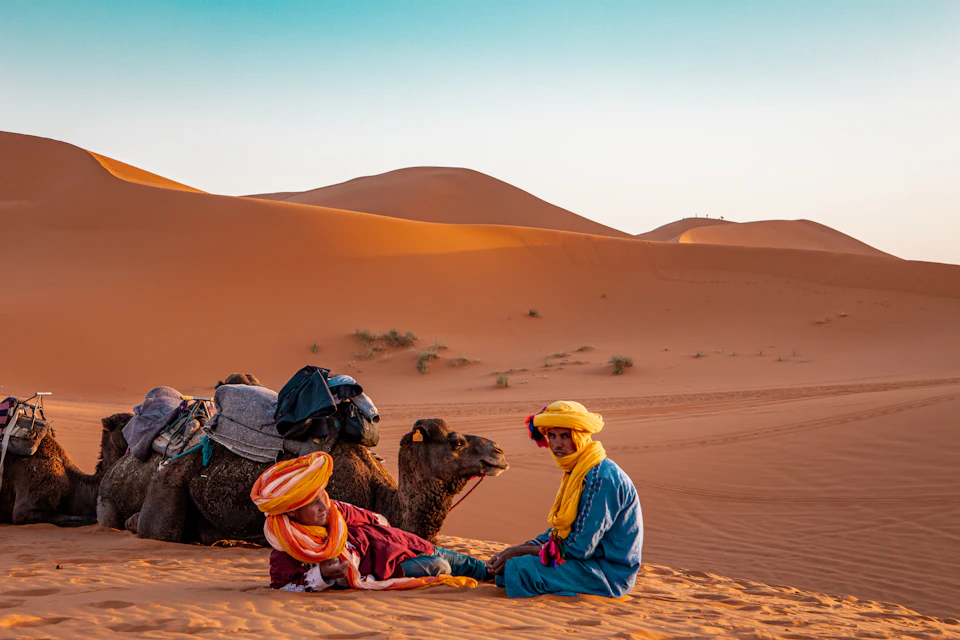
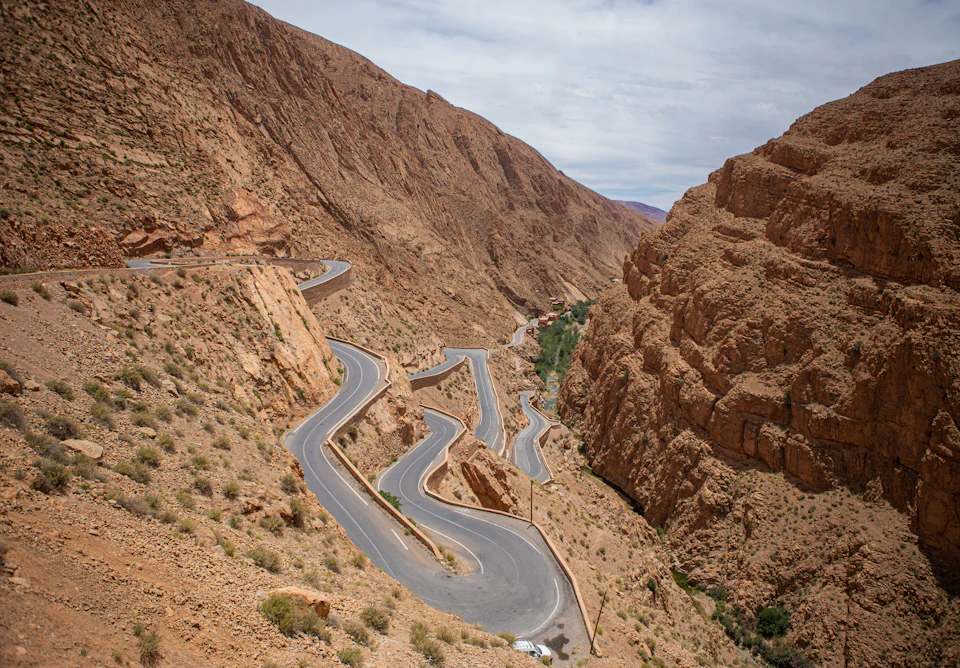
Many itineraries link the two cities through the Sahara: over the Tizi n'Tichka pass (2,260 m) to Ouarzazate, east to the dunes at Merzouga, then north through the Ziz valley and Midelt to Fes. That is at least two nights on the road. Our Marrakech to Merzouga drive guide covers the first 560 km and their 9 hours of driving, and the Tizi n'Tichka pass guide describes the mountain section.
Is the train a better option?
For one or two travellers, often yes. ONCF runs several direct trains a day from Marrakech to Fes via Casablanca, Rabat and Meknes. The journey takes roughly 6 h 30 to 7 hours. Fares depend on class and date and typically fall somewhere between 220 and 350 MAD per person at the time of writing. First class has reserved seats and is worth the supplement on a journey this long.
The train's limits are practical. You need a taxi to the station in Gueliz and another from Fes station to a medina gate. Luggage is yours to lift. There is no stop on request, and the last arrivals reach Fes late in the evening, when finding a riad in the medina on foot is harder.
Coaches also run, in about 8 to 9 hours. They are cheaper than the train and slower. Flights between the two cities take about an hour but operate only on certain days, so check before you plan around one.
When a private transfer makes sense
A private transfer from Marrakech to Fes costs €260 for a sedan (1-3 passengers), €300 for a minivan (4-6) and €400 for a minibus (7-14). Tolls, fuel, taxes and luggage are included. That is a real sum for a couple, and the train will cost them far less. The balance changes in these cases:
- Groups and families. Six people in a minivan pay €50 each for a door-to-door journey that is about an hour shorter than the train, before counting station taxis.
- Tight schedules. Leave Marrakech at 7 am and you are in Fes for a late lunch. You choose the departure time, day or night, at the same price.
- Heavy luggage or children. Six suitcases fit in a minivan. Child seats are free on request.
- A stop on the way. Short stops are free. A coffee in Rabat or a look at Bab Mansour in Meknes breaks the day well.
You pay the driver on arrival, in cash, in EUR, MAD, GBP or USD. Cancellation is free up to 24 hours before pickup. Reserve through the booking form or on WhatsApp.
Arriving in Fes: where the car stops
Fes el-Bali, the old medina, is one of the largest car-free urban areas in the world. No transfer can reach a riad door. The driver drops you at the nearest access point: Bab Boujloud and Batha on the west side, Bab Rcif in the centre, Bab Guissa to the north. Ask your riad which gate to use and send it to us with the booking. Most riads send someone to meet guests at the gate and help with bags.
Hotels in the Ville Nouvelle are reached directly by car. From there the medina is a 10-minute petit taxi ride.
Key takeaways
- Marrakech to Fes is 530 km by motorway, about 5 h 30 of driving via Casablanca, Rabat and Meknes.
- The Middle Atlas road via Beni Mellal, Azrou and Ifrane (1,665 m) takes 7 to 8 hours and can close briefly for snow in winter.
- Direct ONCF trains take roughly 6 h 30 to 7 hours and are the cheapest comfortable option for one or two people.
- A private transfer costs €260 per sedan, €300 per minivan and €400 per minibus, tolls included.
- Cars cannot enter the Fes medina: drop-off is at a gate such as Bab Boujloud, Batha or Bab Rcif.
Comments (0)