Ourika Valley day trip: Setti Fatma, waterfalls and how to get there
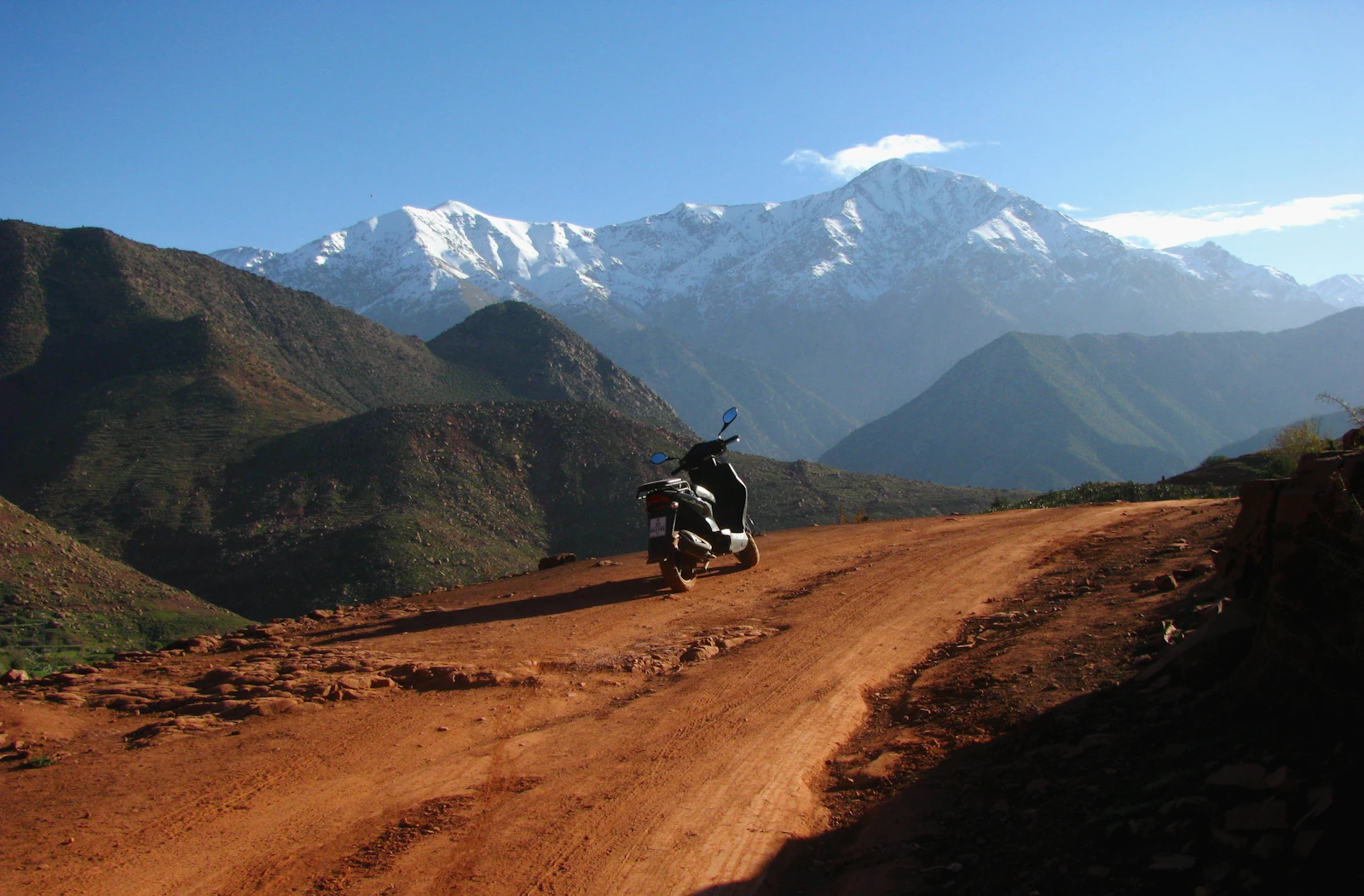
An Ourika Valley day trip is the shortest mountain outing from Marrakech: Setti Fatma, the village at the end of the road, is about 60 km and 1 h 15 from the city, at roughly 1,500 m. Allow six to seven hours door to door, including the walk to the first waterfall and lunch by the river. A private car costs €40 one way for up to three passengers; shared taxis and group tours are cheaper per person but slower and less flexible.
What the Ourika Valley is, and what it is not
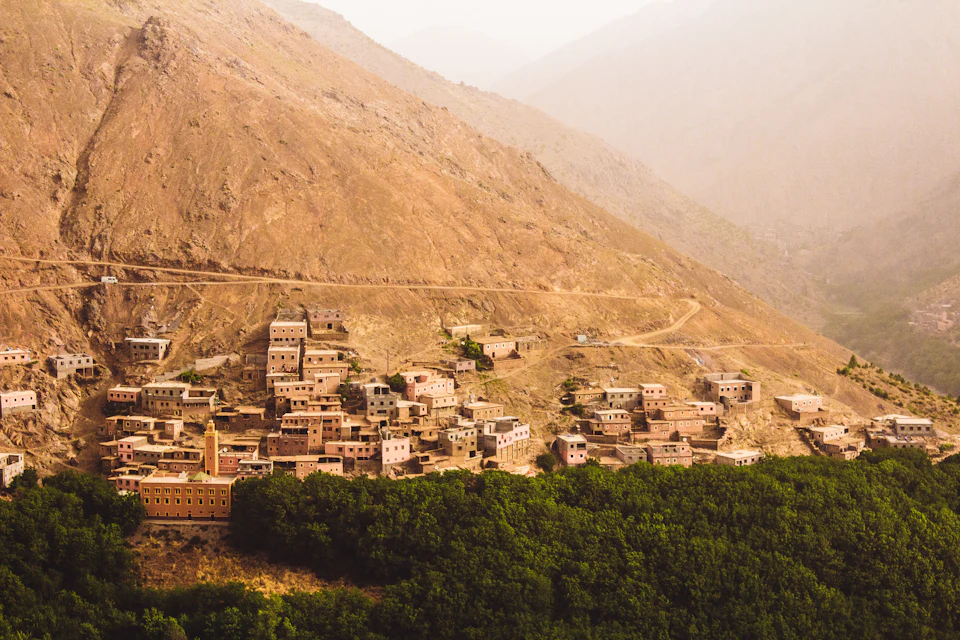
The Ourika is a river valley that cuts into the High Atlas south-east of Marrakech. The lower part is wide farmland with gardens and roadside potteries. After Aghbalou the walls close in, the road follows the river and the villages are built in red earth above the water. Setti Fatma is where the tarmac stops.
Be clear about what you are going for. This is a green valley with a cool river, terraces and a short, steep waterfall walk. It is not wilderness. Setti Fatma is busy, the riverbanks are lined with restaurants, and on summer Sundays half of Marrakech comes up to cool off. If you want quieter trails and bigger mountains, an Imlil day trip suits you better for a similar drive.
How to get to the Ourika Valley from Marrakech
The road leaves Marrakech by the south-east and runs straight across the plain to Tnine Ourika, then climbs gently along the river. It is paved to Setti Fatma. The last 15 km are narrow and slow behind buses and minivans, which is why the drive takes longer than the distance suggests.
Shared grand taxi and local bus
Shared grand taxis for the Ourika typically leave from the rank near Bab er Robb, south of the medina. Some go through to Setti Fatma, others stop at Tnine Ourika, where you change. You pay per seat and leave when the car is full. Local buses serve the lower valley but are slow and, at the time of writing, do not reliably run to the end of the road. Both work if you have time and travel light. Come back before late afternoon: seats towards Marrakech get scarce and queues form on weekends.
Group day tour
Group tours are widely sold in Marrakech and cost little. The programme is usually fixed: a cooperative, a house visit, a restaurant chosen for you and the first waterfall. Fine as an introduction. You will not choose where you stop or for how long. Our article on choosing between a private driver and a group tour sets out the trade-offs.
Private driver
A private transfer from Marrakech to the Ourika Valley costs €40 in a sedan (1-3 passengers), €50 in a minivan (4-6) and €80 in a minibus (7-14), per vehicle and one way, from the airport or any hotel or riad in the city. The return is the same price. Short stops on the way are free, so you can decide between a garden, the souk or a straight run to the falls. For a family or four friends, the per-person cost is modest and you set the clock.
Stops along the Ourika road worth your time
| Stop | Approx. distance from Marrakech | Why stop | Time |
|---|---|---|---|
| Anima garden | 27 km | A designed botanical garden with art and Atlas views; check opening days before you go | 1 h to 1 h 30 |
| Tnine Ourika | 35 km | Large rural souk on Monday morning; a saffron farm nearby, with the harvest around late October and November | 45 min |
| Tafza | 40 km | Small Berber ecomuseum in a restored village house | 30 to 45 min |
| Aghbalou | 47 km | Fork for Oukaïmeden; the gorge begins here | Photo stop |
| Setti Fatma | 60 km | End of the road, waterfalls, lunch by the river | 2 h 30 to 3 h |
A word on argan cooperatives. Argan trees do not grow in the Ourika; the cooperatives on this road are shops with a demonstration. Visit one if it interests you. Skip it without guilt if it does not.
The Setti Fatma waterfalls: what the walk is really like
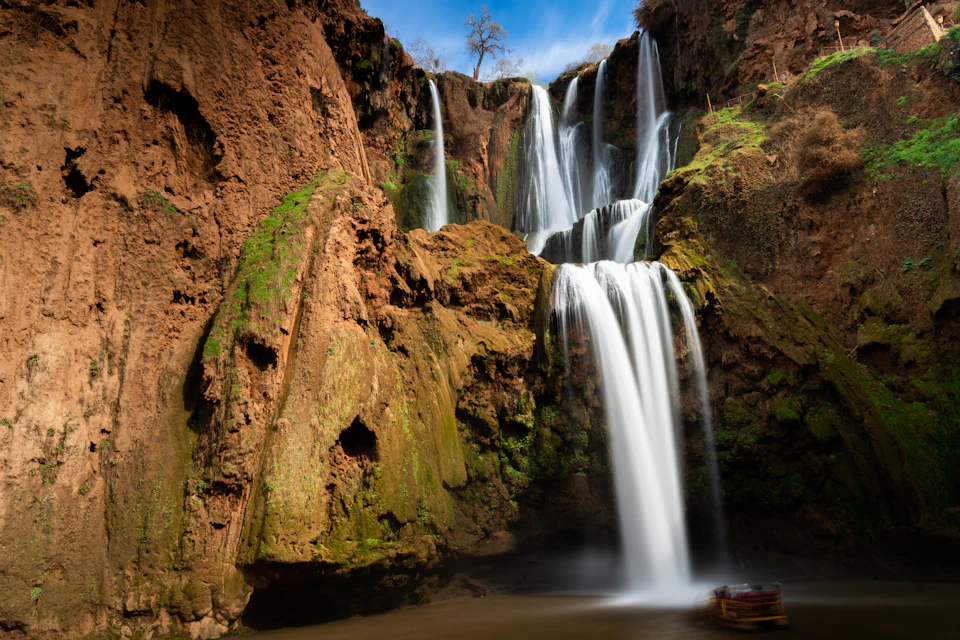
There are seven falls stacked up a side gorge above the village. Most visitors go to the first one and back.
- Getting started: cross the river on one of the footbridges in the village, then follow the path up between the café terraces.
- To the first waterfall: 20 to 30 minutes up. Short, but steep and rocky, with a few places where you use your hands. Trainers with grip are the minimum; sandals are a bad idea.
- Higher falls: the path turns into a scramble on polished rock. Go only with good shoes, a head for heights and a local guide. Allow 2 h to 3 h for the upper loop.
- Guides: men offer their services at the bridge. A guide is not required for the first fall, and the path is obvious. If you take one, agree the price before you set off.
Lunch is tagine at a riverside restaurant, some with tables set right at the water's edge. Ask the price before you sit down. Quality is similar from one place to the next; pick by shade and view.
When to go, and a sensible timetable
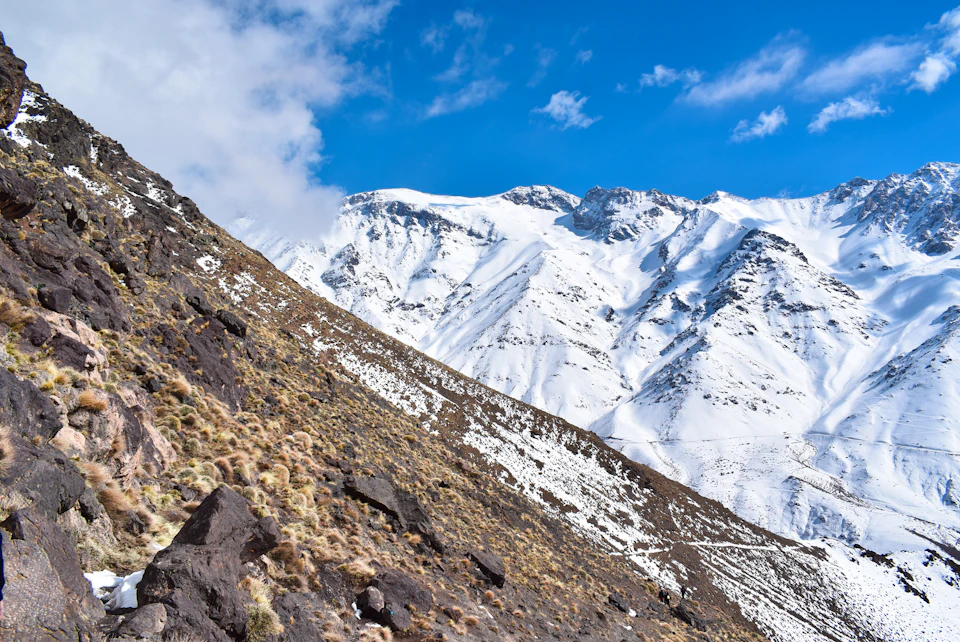
Spring is the best season: snowmelt fills the falls from March to May and the terraces are green. Summer is pleasant by the water and much cooler than Marrakech, but crowded at weekends. Autumn is quiet. In winter the valley is cold and the falls are thin, though the snowy backdrop is at its best.
One safety point matters here. The Ourika rises fast after storms in the mountains, mainly in late summer. If heavy rain is forecast, postpone, and never linger in the riverbed when the water turns brown.
- 9:00: leave Marrakech. On a Monday, leave at 8:30 for the souk.
- 9:45: one stop in the lower valley.
- 11:00: Setti Fatma, walk to the first waterfall.
- 13:00: lunch by the river.
- 14:30: start back, ahead of the afternoon traffic.
- 16:00: Marrakech.
If you are still choosing between this and longer drives, our ranking of the best day trips from Marrakech by car compares them by driving time, and the Atlas day trips overview lists every route with its fixed price.
Key takeaways
- Setti Fatma, at the end of the Ourika Valley road, is about 60 km and 1 h 15 from Marrakech.
- A private car costs €40 one way for 1-3 passengers, €50 for 4-6 and €80 for 7-14.
- The first Setti Fatma waterfall is 20 to 30 minutes up a steep, rocky path; no guide is needed for it.
- Monday is souk day at Tnine Ourika; summer Sundays are the most crowded.
- The river can flood quickly after mountain storms, so avoid the valley when heavy rain is forecast.
Comments (0)